

In the opening months of 1921, Mohandas Gandhi, not yet the revered ‘Mahatma’ of history, issued a warning to labor and rural organizers pushing for a general strike against British colonial rule of India:
“We must not tamper with the masses. It is dangerous to make political use of factory labourers or the peasantry—not that we are not entitled to do so, but we are not ready for it. We have neglected their political (as distinguished from literary) education all these long years,” he wrote in Young India, the periodical he founded.
Ready for what? one might ask. India in 1921 was electric with radical potential. Russia, China, and Germany had already been transformed and destabilized by revolution; now, in the crown jewel of the British Empire, decades of anti-colonial agitation and material exhaustion were igniting wildcat strikes, railway walkouts, and peasant committees refusing to pay rent to ‘semi-feudal’ landlords, who collaborated with the British to maintain their power.
To serve their governing interests and offload administrative burdens, British authorities engineered the primacy of these feudal-in-appearance, capitalist-in-practice landlords, known generally as zamindars (with regional and local variations). Following the model of the 1793 Permanent Settlement in Bengal, the British East India Company legally converted that class from tax farmers of the Mughal government to absolute, de facto hereditary owners of land. They evidently hoped that the zamindars would appreciate the supposed ingenuity of the British ‘land-improving’ model—that is to say: enclosing the commons, forcing peasants to cultivate cash crops for the global market, and accumulating thousands of square kilometers in land for economies of scale. And for services rendered, the landlords charged the peasants exorbitant rents and fees (sometimes amounting to 80-90 percent of their crops or revenue from crops), remitting the tax burden to the British exchequer and violently punishing some of their less punctual tenants through enslavement, eviction, and mercenary terror.
True feudalism, in most contexts, is a paternalistic system of obligation — unequal, inflexible, and repressive — but obligation nonetheless. From 1918-1919, a countrywide crop failure escalated into a devastating famine when the zamindars, whose incessant demands for cash payments had already pivoted the axis of local agriculture towards indigestible cash crops, proceeded to hoard what little food remained without even the pretense of lordly protection.
In June 1920, Jawaharlal Nehru, then a provincial secretary for the pro-independence Indian National Congress (INC), visited an encampment of 200 starving, marching peasants outside of Allahabad.
“Looking at them and their misery and overflowing gratitude, I was filled with shame and sorrow, shame at my own easy-going and comfortable life and our petty politics of the city which ignored this vast multitude of semi-naked sons and daughters of India, sorrow at the degradation and overwhelming poverty of India,” he later wrote. “A new picture of India seemed to rise before me, naked, starving, crushed, and utterly miserable.”
The peasants and their leader, the Ramayana-citing, militant organizer Baba Ram Chandra, were satisfied neither as slaves nor as objects of pity. When colonial authorities imprisoned Ram Chandra in August on fabricated charges of theft, thousands of furious peasants across the Awadh region marched on Pratapgarh jail, terrified the local government, and secured his release. With momentum on their side, the peasants of Awadh, with the eventual support of Nehru and a faction of INC leaders, formed the Awadh Kisan Sabha; in a holy ritual on the banks of the Saryu, they swore to:
Refuse to leave their fields if illegally evicted.
Pay only the recorded rent.
Pay rent regularly at the recorded time only.
Refuse to pay rents without proper receipts.
Refuse to perform forced labor without payment.
Refuse to pay ‘customary’ fees.
Refuse to pay for the use of irrigation tanks.
Refuse to pay for grazing cattle on jungle and pasture land.
Offer no help to criminals.
Oppose oppression by the zamindars.
Take all disputes to their own local councils and abide by the decision.
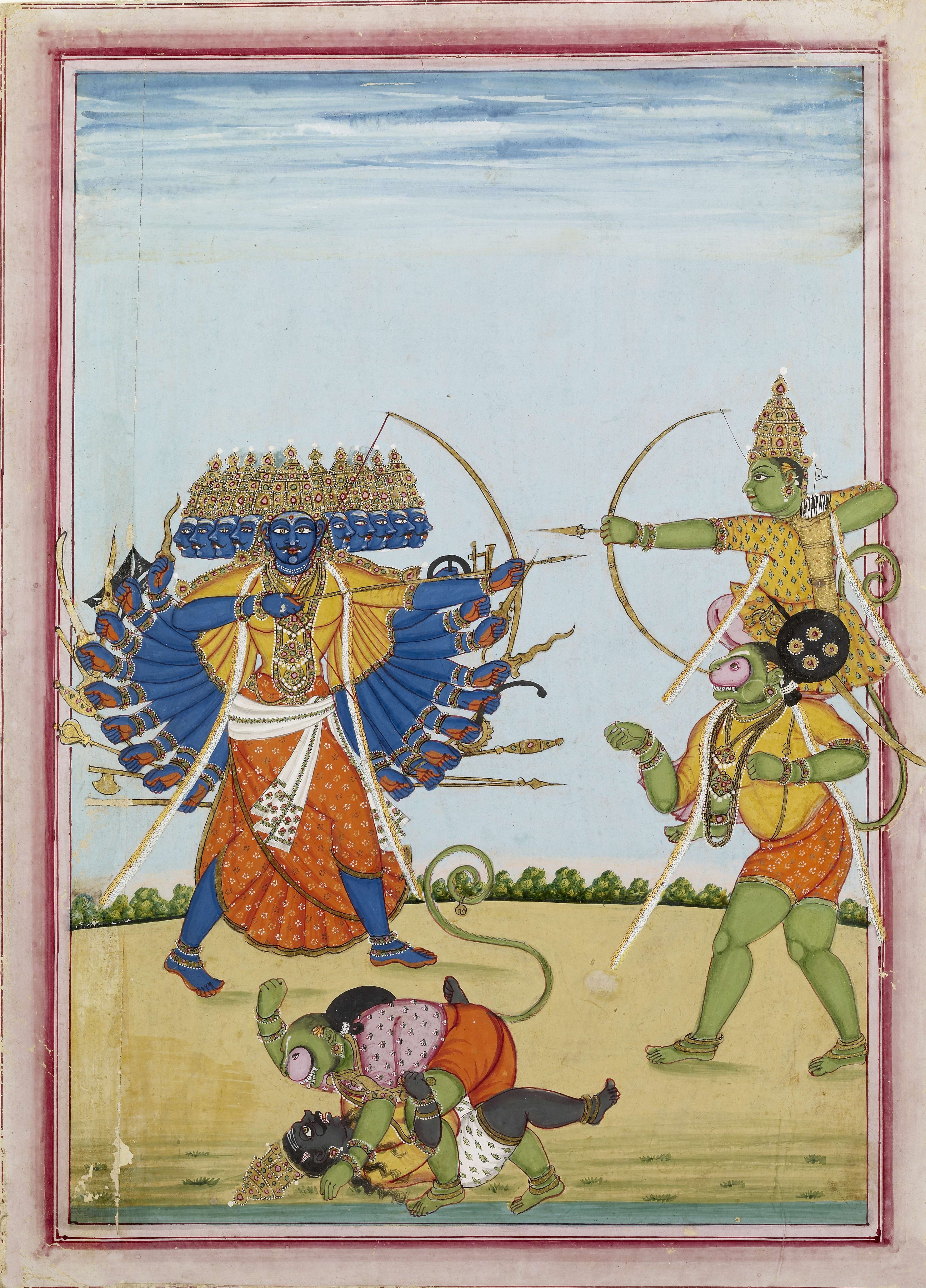
The participants also organized a sweeping boycott, cutting the zamindars off from the daily labor of barbers, shoemakers, washerwomen, and other rural workers. Caste and ethnic divisions blurred in the heat of class indignation. Dalits, or those of the lowest and most ‘untouchable’ castes, were historically tethered by ancestral debt, obligated to pay the highest rents, subjected to degrading sumptuary laws, sexually exploited, and forced to undertake the most grueling and dangerous forced labor, such as cleaning human waste and serving as human beasts of burden. Consequently, they had especially good reason to become invested members of the movement, which they did by the thousands, swearing oaths alongside tenant farmers on the banks of holy rivers or pools and trenches symbolizing them. Ram Chandra declared the zamindars and taluqdars—their somewhat less wealthy cousins—as akin to the demon-king Ravana from the epic Ramayana, while the mobilized peasants echoed the righteousness of Rama’s army.
At the same time, Gandhi, the chief organizer of the Non-Cooperation Movement, emerged as the de facto leader of the INC. His political program called on all Indians to detach themselves from any activity that sustained British rule in India; a refusal of cooperation that entailed the boycott of British goods, shunning of British schools, and the withholding of labor for British industry and infrastructural projects. The program did not identify the zamindari as part of the imperial regime—it was fundamentally nationalistic rather than emancipatory in its character, preferring self-purifying, nonviolent satyagraha over militant labor tactics, and national unity over class struggle. The continued oppression of the Indian peasantry would be the cost of doing business — the business being that of Indian statehood — even if the peasants of Awadh were proving that the two goals were not mutually exclusive. That the zamindars “would prove the chief stumbling block… to the Non-Cooperation programme” was the most Gandhi would offer, on strategic grounds. He rather spoiled even that mild concession by also suggesting in Young India that it was “dangerous to make use of peasants and workers.”
Nevertheless, Gandhi still possessed credibility among the rural workers. He was a leading symbol of anti-colonial resistance, even if he chose to attack only one head of the beast. In 1917, he had visited the peasants of Champaran with the aim of organizing a commission of lawyers that would investigate exploitation by European planters. The government threatened him with arrest; Gandhi stayed anyway. Colonial authorities blinked first in this instance, and even appointed him as the lead inquirer under official auspices. Gandhi had his wish: he whipped up grievances against British rule without alienating native-born landlords, treated the peasants as objects in need of rescue rather than agents exercising their own political power, and seemingly demonstrated the supremacy of legalistic, incremental reform over social revolution. Such reform, however limited, potentially short-lived, and dependent on elite goodwill, was, combined with Gandhi’s apparent influence in government, paternalistic charisma, and almost-mythical image as a man of immaculate morals, compelling enough for Ram Chandra to invite him to Awadh to help lead the peasants.
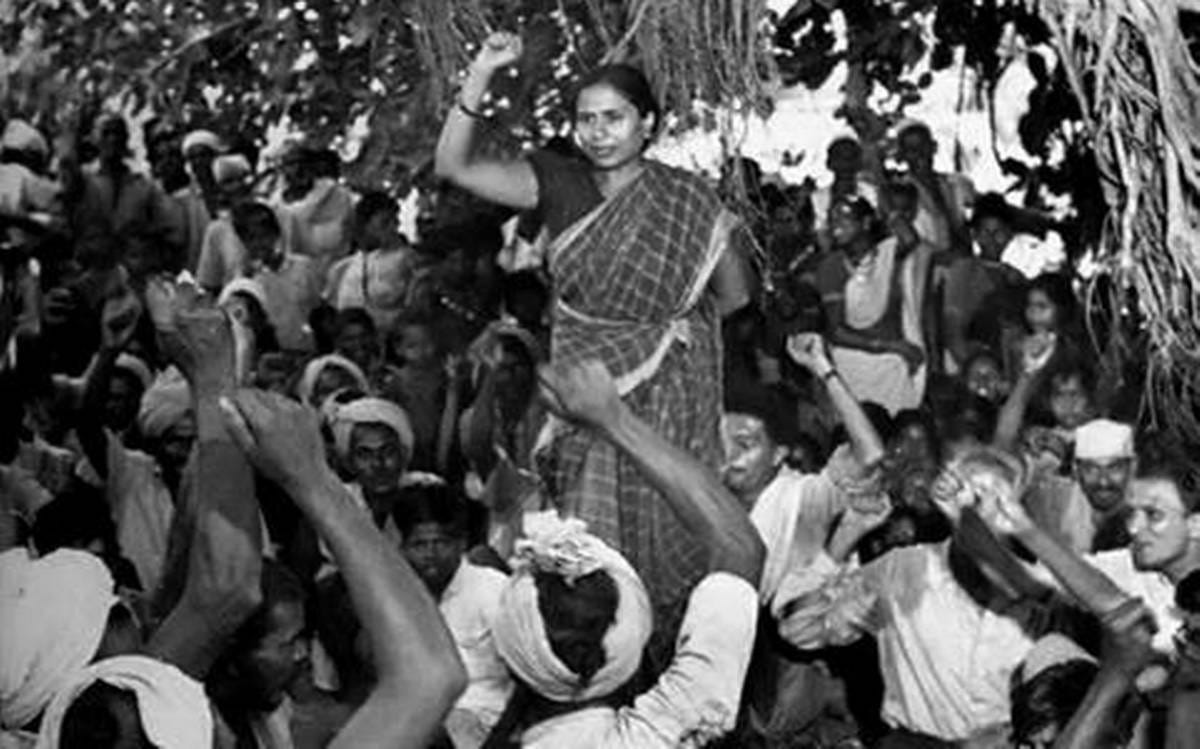
The Sabha were doing just fine on its own, for now; in several districts they had uprooted zamindari authority and successfully replaced it with organizing structures populated by their own appointed or elected delegates. British police and their proxies retaliated, shooting into marching crowds and arresting them by the dozens—but this was not enough to contain a revolt that by early 1921 counted up to 60,000 people in their ranks and had overwhelmed much of the countryside in the state of Oudh. Bands of peasants, enjoying numerical superiority and radicalized further by bloody government repression, plundered the homes of landlords, as well as granaries and bazaars, distributing the spoils among themselves and their fellow villagefolk. Much of their agitation used Gandhi’s name, likely out of both genuine admiration and a pragmatic effort to legitimize their own actions.
Gandhi was horrified. He described such actions as “madness” and condemned the peasants for “committing mischief.” He warned that if the peasants did not adhere to his methods of resistance — which at no point ever included withholding rent — he would “not tolerate them.” He justified his absolute commitment to ahimsa (non-violence) as a claim to moral high ground and pilgrimage for spiritual purity, effectively demanding that the peasantry suffer poverty and terror in hopes of a top-down concession. Peasant women led social boycotts, maintained supply lines through the countryside, and physically defended their villages against armed police and landlord mercenaries; Gandhi nevertheless modeled his theory of resistance on an idealized vision of women as passive, apolitical vessels of endurance, using the archetype of the goddess Sita as a model for the Indian masses to emulate. Rama, Arjuna, and their followers obeyed their spiritual mission to purge evil from the cosmic order; Gandhi, who revered the Bhagavad Gita, had effectively partitioned this prerogative away from the most oppressed people.
Through 1921 and 1922, Gandhi and his allies tried frantically to induce the peasants to not only cease any violent action but also to immediately resume the payment of rent and taxes. Resolutions passed by the Congress Working Committee (CWC), presided over by Gandhi, stated:
CWC advises Congress workers to inform the ryots (peasants) that withholding of rent payment to the zamindars is contrary to Congress resolutions.
CWC assures zamindars that the Congress movement is in no way intended to attach their legal rights and that even where the ryots have grievances, the Congress desired that the redress be sought by mutual consultation and arbitration.
His contempt for the political peasant was not only about his theory of change, but also what he viewed as the endpoint of any independence movement. “What is needed is not the extinction of landlords and capitalists, but a transformation of the existing relationship between them and the masses into something healthier and pure,” he said, effectively putting his trust in a class of people whose self-interest and historical behavior should have long deprived them of such a right.
Without the partnership of a national body, the peasant movement in Awadh began to splinter in the face of logistical capacity and British repression. Ram Chandra was arrested a second time in February 1921 in front of 80,000 people who had come out to listen to him, along with thousands of other rebellious peasants. Later that year, British authorities passed legislation that offered some moderate concession—adjustments to the tenant statutory period, banning some ‘customary’ fees, and offering theoretical eviction relief. Those policies were designed to satisfy some of the less desperate tenant farmers and further split the movement.
In the end, rather than Gandhi convincing the peasants to stand down, it was their continued defiance that made Gandhi quit his own project. On February 2, 1922, a crowd of largely rural workers, chanting Gandhi’s name, protested against high food and liquor prices at Chauri Chaura, only to be violently beaten back by British Indian police. Two days later, an even larger crowd of about 2,500 people marched down market lane to picket a liquor shop. Police fired in the air; some protesters threw stones. Sub-inspector Prithvi Pal ordered his men to fire into the crowd, killing at least three and wounding more. The agitated demonstrators surged forth, chased the officers to their station, and set fire to the building, killing 22 officers inside. For Gandhi, that was enough. He embarked on a five-day fast as penance for the violence, then announced an end to the Non-Cooperation Movement. The decision was made while Nehru and several INC members were in jail; they felt that Gandhi had acted hastily just as the support for independence was gaining serious momentum. In March, British authorities arrested Gandhi as well.
In the absence of clear leadership, organized resistance fizzled out for the next several years. But with time, the persistence of deplorable conditions, and the stubbornness of the exploitative system, agitation re-emerged in different forms. Indian radicals, disillusioned by abandonment, embraced overtly Marxist principles and saw the INC and Gandhi, in the best of situations, as untrustworthy allies of convenience. But their efforts were almost entirely directed at radicalizing and mobilizing urban workers, like the 100,000 Bengali textile workers who went on strike for six months in 1928, and then another 250,000 jute mill workers in 1929. Gandhi, for his part, remained stubborn in his belief that the only legitimate form of resistance was non-violent non-cooperation against British authorities, but not Indian elites, who were seen as allies in a nationalistic struggle.
Radical uprisings outside the INC’s sanction continued across the countryside. In 1936, radical organizers formed the All India Kisan Sabha, which adopted a red flag and demanded the complete abolition of the zamindari system. This uncompromising class warfare brought them in conflict with an INC increasingly absorbed in elected state offices, institutional compromise, and even the police suppression of those movements. For the rural radicals, enduring hardship was not a spiritual exercise in moral purification, but a tactical necessity. Godavari Parulekar, founder of the Sabha’s Maharashtra branch, wrote in Jevha Manoos Jaga Hoto (‘The Awakening of Man’): “A person who has a goal does not worry about the problems and suffering that must be faced to achieve that goal. In fact facing problems gives a kind of satisfaction.”
For the most part, however, the rural masses, geographically dispersed and violently repressed, were left with little choice but to accept INC hegemony and its conditions for support against their oppressors. The party worked tirelessly to reassert control of the narrative, promoting Gandhi as a saintly, unifying patriarch rather than a class warrior. In 1921, peasant radicals had been able to use his magical name to organize massive, self-directed revolts; by 1924, Gandhi’s hostility to class struggle and social liberation was abundantly clear, and his leadership was nevertheless accepted in large numbers as the only alternative to destruction by the colonial state. Those who did not accept continued to revolt, and they continued to be crushed by the Indian state after the British retreated.
Independence in 1947 was an outcome largely credited to Gandhian non-cooperation and to the singular influence of Gandhi, by now regarded as a mythical figure. It was also undoubtedly shaped by the loss of British military control due to mutinies among the Indian troops, the exhaustion of the British Empire after six years of prolonged global war, and the mobilizing effect of movements outside of Gandhi and the INC’s control. India and Pakistan were now sovereign states. The cost of sidelining and suppressing more radical action meant that its subsequent destinies would be shaped by owners of land and capital—with native compatriots replacing the British as their political benefactors, zamindari in practice replacing zamindari in name even after their legal abolition, and the masses remaining the exploited class.